You watched the video. You read the label. You bought every ingredient listed. You adjusted ratios, tasted, adjusted again. And still something was missing. That particular heat in the hot sauce. That specific crunch in the fried chicken. That depth in the cola that refuses to show up in your kitchen. It is not your cooking. It is their intellectual property strategy.
Most people assume that if a recipe is valuable, it must be patented. In reality, the opposite is often true. The most commercially important food formulations in the world are not patented at all. They are protected as trade secrets. And that decision is deliberate.
A patent gives twenty years of exclusivity. In exchange, you disclose everything. After expiry, competitors are free to use your blueprint. For technology products with short lifecycles, that is an acceptable trade. For a recipe that defines your brand for generations, it is not.
Consider Coca-Cola. The formula, internally referred to as Merchandise 7X, has never been patented. It is stored in a purpose-built vault at the World of Coca-Cola in Atlanta.


The theatre around the vault is well known. The legal conviction behind it is less discussed. In 1977, the company exited the Indian market rather than disclose its formula under regulatory pressure. It returned only when the environment changed. That was not symbolism. It was an acknowledgement that the formula was more valuable than short-term market access. A patent filed in 1886 would have expired by 1906. The trade secret still generates value today.
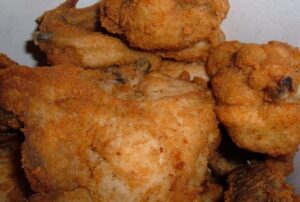
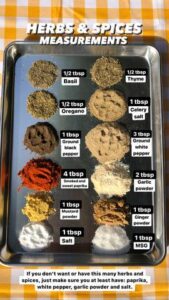
This philosophy is not unique. KFC protects its 11 herbs and spices blend through operational design rather than registration.
The blend is reportedly split between two suppliers. Each produces part of the mix. Neither sees the full formula. The final combination occurs under controlled conditions. This is engineered ignorance. Even if a supplier breaches confidentiality, it can reveal only half a secret, which is commercially useless. Trade secret protection here is not just a clause in a contract. It is supply chain architecture.
The same pattern appears in Tabasco sauce, produced by the McIlhenny family since 1868.
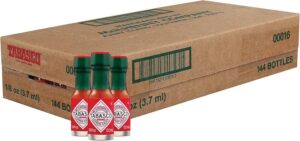
The peppers are grown from controlled seeds. The mash is aged for years in white oak barrels. The fermentation conditions and precise ratios remain confidential. The brand is heavily trademarked. The formulation is not patented. More than a century and a half of continuity, protected not by disclosure but by discipline.
Even everyday products reveal the same logic. Heinz ketchup discloses its ingredients on the label because food law requires it. Tomatoes, vinegar, sugar, salt, spice, natural flavouring. What it does not disclose are ratios, sourcing, or process parameters. “Natural flavouring” is a legally compliant phrase that protects competitive detail. Regulatory transparency does not mean commercial transparency.
In India, the flavour competition is particularly visible. PepsiCo’s Lay’s Magic Masala variant is tailored for local taste profiles. Competitors attempt to replicate it. Flavour houses can come close through analytical techniques such as gas chromatography and sensory mapping. But close is not identical. In fast moving consumer goods, the final few percentage points of taste difference define brand loyalty and pricing power. That gap is guarded through NDAs, compartmentalised sourcing, and tightly controlled internal access to formulation data.
What many consumers do not see is the use of proprietary premixes. A flavour house may supply a complex blend under a coded internal name. The supplier understands the technical brief but not the final product architecture. The food company integrates it without disclosing the complete context. No single participant in the chain holds full visibility. Compartmentalisation reduces the risk that one leak can reconstruct the entire formula.
This approach is not without vulnerabilities. Employees leave. Competitors independently develop similar formulations. Reverse engineering is lawful in most jurisdictions. A rival can buy your product and subject it to laboratory analysis. Some companies even introduce trace non functional components to complicate such analysis. Ultimately, enforcement depends on demonstrating that reasonable steps were taken to maintain secrecy.
In India, where there is no standalone trade secrets statute, that point is critical. Protection arises from contract law and breach of confidence principles. Courts look for evidence of structured confidentiality measures. Access controls, NDAs, supplier agreements, documented policies. Secrecy must be operational, not merely asserted after a dispute arises.
Patents still play a role, but in a different layer of the architecture. Nestlé patents encapsulation technologies that control flavour release. Unilever has patented ice cream microstructure processes. ITC Limited has filed patents relating to extrusion parameters in food manufacturing. These protect process innovation without revealing the core flavour blueprint.
The structure, when done well, is layered. Trade secret over the formulation. Patent over the process. Trademark over the brand. Contracts governing the people.
The next time you open a packet of crisps or pour a glass of cola and think there is something here I cannot quite identify, remember this. That missing note is not an accident. It is the product of decades of disciplined confidentiality, controlled supply chains, regulatory strategy, and careful legal design.
The most powerful intellectual property in the food industry often has no filing number, no public register, and no expiry date.
It survives because it is never fully revealed.